How Founders Are Navigating Capital Constraints and Economic Headwinds | Catalina Parker | Economic Insider
Apr 13, 2026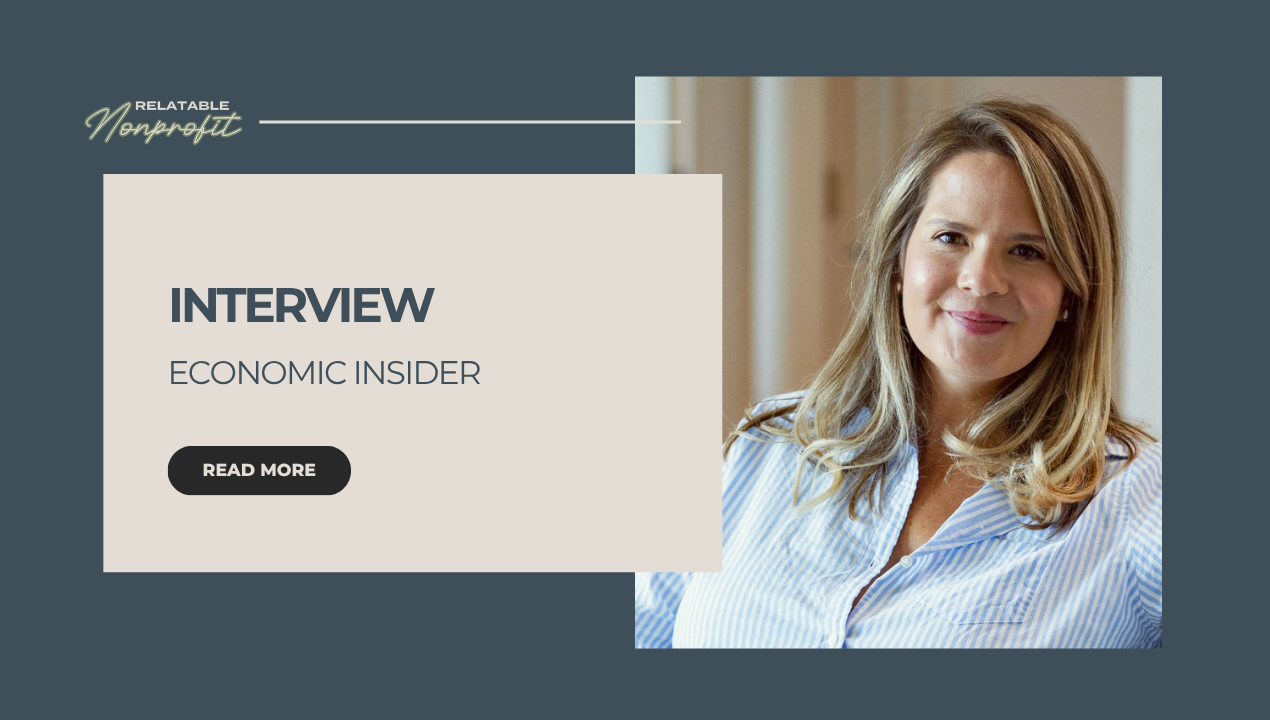
How Entrepreneurs Are Navigating Economic Uncertainty in 2026
READ THE WHOLE ARTICLE HERE
There’s no such thing as an “easy” time to be in business, but current economic circumstances certainly make for a particularly complicated moment for founders and leaders. Between tightening access to capital, inflation’s impact on consumer spending, tariffs, and supply chain disruptions, entrepreneurs must be more adaptive and resilient than ever in order to stay in the game.
There’s no simple formula for success when facing today’s combination of financial factors, but leaders who are open to strategic pivots, transparency, and community engagement are finding their footing amid the chaos and staying on track with their biggest goals. Here are a couple of approaches helping founders from the Dreamers & Doers community power growth, even in the volatile economy of 2026.
Overcoming Challenges in Fundraising and Capital Access
As CEO of Sengo, a firm that reimagines fundraising and investing through education, community, and access, Ila Corcoran has seen firsthand the impacts of current financial factors on access to funding. “Our business operates adjacent to many industries, as we support pre-seed to Series A founders and early-stage investors,” she says. “Economic headwinds in 2025 made it harder for businesses to fundraise and for businesses to meet their revenue numbers.”
To combat these challenges, Corcoran and her team have focused on offering educational resources and community as a product, using knowledge to bring in value amidst uncertainty.
At The New Solutions Network, a focus on ethical, non-predatory standards has taken priority as founders contend with tightening capital. According to founder and Chief Strategy Officer Natanya Wachtel, the company fully rebuilt with these principles in mind, codifying new standards for AI, data use, capital, and partnerships directly into their operating and legal frameworks.
“While it was a leap of faith, this clarity became a signal that attracted aligned partners organically, resulting in cleaner deal flow, faster paths to revenue, and greater long-term stability,” Wachtel says.
Managing Shifts in Consumer Spending and Inflation
Funders aren’t the only ones changing the way they approach spending. Consumers are also revisiting their habits, thanks in some part to ongoing inflation. In response, some companies have adapted their pricing strategies and packages.
“We doubled down on our versatility value proposition, ensuring families get maximum value from every dollar spent,” says Kelly Hubbell, founder and CEO of Sage Haus. “We’ve improved retention and client satisfaction while justifying our premium positioning in a cost-conscious market.”
Other leaders have rethought their offerings even more proactively, revising products based on clear feedback from existing clients who indicated inflation was an issue.
“Inflation and shifts in consumer spending made our buyers more cautious about committing to a 12-month coaching community upfront,” says Catalina Parker, co-founder of Relatable Nonprofit. “We introduced three- and six-month membership options to lower the commitment barrier while still giving members access to our program. That change increased conversions and shortened our buying cycle.”
Navigating Supply Chain Disruptions and Tariffs
Companies also faced new friction in recent years thanks to the uncertainty around tariffs. Isabella Rodriguez, CEO of international event agency Super Great Fantastic, has stayed the course by focusing on building transparent relationships.
“In events, we sometimes must plan a year in advance, and with the tariffs affecting everything, it’s hard to track and keep clients’ expectations,” Rodriguez says. “We generally line up our suppliers ASAP. We’ve had relationships with the people we work with for years, and they help let us know when things are changing so we can be armed with that information before sending a budget to a client.”
Rodriguez’s team practices transparent billing, separating vendor costs from the agency fee.
Ellen Hockley learned about the impacts of tariffs and supply chain disruptions the hard way, having closed her second business, an apparel brand, because of challenges around production, manufacturing, and distribution. “I was never able to make the headway needed to build the business, and as it became clear that tariffs were going to be implemented, I knew we would never survive,” she says.
Today, Hockley forges ahead with her consulting business, where these factors are not an obstacle to growth.
Building Community and Trust During Economic Shifts
When in doubt, some entrepreneurs find that building community and doubling down on customer relationships is the best approach to tough economic times.
Amber Chaudhry, who used her background as a pharmacist to found Noori Skincare, opted to prioritize direct community engagement over increasing paid ads. Pop-up events, school events, and face-to-face education with potential customers improved conversion rates, strengthened repeat purchases, and created more loyalty-driven growth. It also saved Noori’s advertising budget during such an unpredictable period.
No matter what’s in flux, entrepreneurs find that one thing always stays the same: the power of face time with potential clients and other contacts.
“I’ve decided to do more in-person networking, meeting as many people as I can in real life,” says Catherine Valega, owner of Green Bee Advisory. “I still blog and host webinars, but I’m adding more live events to my calendar.”
Rooting Everything in Ethical Decision-Making and Long-Term Growth
In periods of economic upset, leaders also find opportunities to think more critically about finances and to reflect on what that means for clients and other stakeholders.
“Capital has increasingly flowed toward hype-driven, extractive models, while organizations handling sensitive behavioral and mental health data are pressured to move fast, monetize aggressively or compromise governance,” Wachtel says of recent reflections at New Solutions Network. “We feel that we are seeing a reckoning around values, trust, and responsibility. Businesses that survive and grow won’t be the loudest or fastest, but the ones willing to define what they will not do as clearly as what they will.”
The 2026 State of Nonprofit Consulting Report
See what nearly 400 nonprofit consultants reveal about income, client work, business structure, and what makes consulting sustainable.